Source Dvb S Mars Europe Satellite Receiver for TV and IoT
Compare 30 dvb s mars europe satellite receiver options featuring DVB-S/S2 input, 1080P resolution, and Ku/C band support. These digital set-top boxes offer customizable configurations for personal TV applications, with origins in Guangdong, China, and various chipset models available for diverse sourcing needs.
Key considerations
Products List


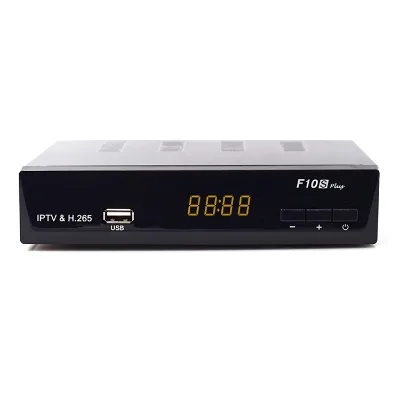
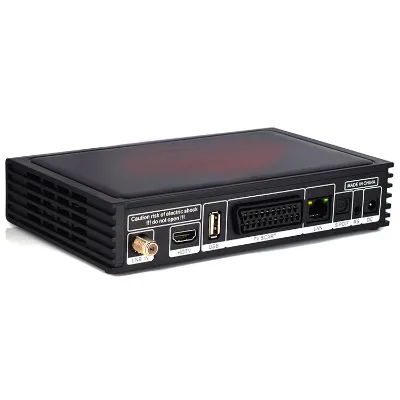


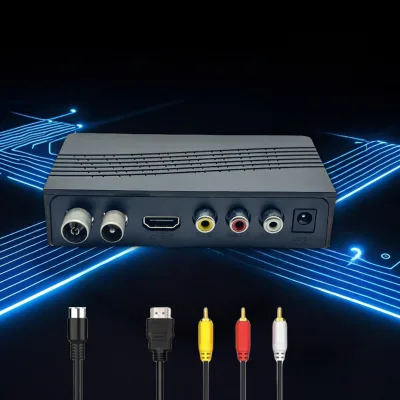


Comprehensive Sourcing Guide
DVB S Mars Europe Satellite Receiver Sourcing Guide
Procuring digital satellite receivers for the European market requires strict adherence to specific frequency bands and signal standards. The observed product data indicates a focus on Ku and C wave range programs, which are critical for matching regional satellite footprints. Buyers must verify that the selected unit supports the DVB-S and DVB-S2 standards to ensure compatibility with European broadcast infrastructure. This verification prevents signal loss and ensures the device can decode the specific transponder frequencies used in the target region.
Commercial listings reveal a wide variance in physical dimensions and packaging, ranging from compact 8.6x15x4cm units to larger rack-mountable chassis. This diversity suggests that procurement strategies must account for the specific installation environment, whether it is a residential set-top box application or a professional head-end deployment. The presence of models with varying RAM and flash memory capacities further necessitates a detailed review of the chipset specifications to match performance requirements with budget constraints.
Product Scope and Observed Listing Signals
The market data highlights a distinct separation between consumer-grade set-top boxes and professional front-end equipment. Consumer units often feature standard resolutions like 1080P and utilize common chipsets such as the Hi3716mv330, while professional units may offer multi-function capabilities and larger form factors. Buyers should carefully distinguish between these categories, as the intended application dictates the necessary input voltage ranges and operating temperature tolerances. Misidentifying the product class can lead to procurement of equipment that fails under specific environmental conditions.
Listing signals also indicate a strong emphasis on customization availability, with many suppliers offering tailored solutions for specific regional needs. The observed "Customized" and "Customization: Available" attributes suggest that buyers can request specific branding or firmware adjustments. However, the presence of "private mold: NO" in some listings implies that certain models may be standard off-the-shelf items without unique physical tooling. Procurement teams must clarify whether a custom mold is required or if a standard unit with firmware customization suffices for their project.
Technical Specifications to Verify
Technical validation must begin with the frequency range and wave type compatibility, as the data explicitly lists Ku and C wave range programs. Buyers should confirm that the receiver's tuner supports the exact frequency span of 950-2150 MHz to ensure seamless signal acquisition across different satellite transponders. Additionally, the input voltage specification of 110-240V AC is a critical safety and operational parameter that must align with the local power grid standards in the destination country. Failure to verify these electrical parameters can result in immediate hardware failure upon deployment.
Memory and processing capabilities are equally vital for ensuring smooth user experience and future-proofing the investment. The observed specifications include DDR3-128MB RAM and 8MB Flash memory, which are suitable for standard definition and high-definition decoding tasks. However, buyers must verify if these specifications meet the demands of their specific content delivery requirements, especially if 4K or advanced interactive features are anticipated. The chipset model, such as the Hi3716mv330, should be cross-referenced with current software support lifecycles to avoid obsolescence issues.
Compliance and Safety Documentation
Regulatory compliance is non-negotiable for importing electronic goods into the European market, where CE and FCC certifications are standard requirements. The provided data confirms that some units carry CE and ISO certifications, which are essential for legal market entry and consumer safety. Buyers must request valid, up-to-date certification documents for every batch ordered, as these certificates are often model-specific and cannot be assumed to cover all variations within a supplier's catalog. Relying on outdated or generic certification claims can lead to customs seizures and legal liabilities.
Safety documentation must also address the physical operating environment of the equipment. The observed operating temperature range of 0°C to 40°C defines the safe limits for device operation, which is crucial for installations in unconditioned spaces or outdoor enclosures. Procurement teams should verify that the product's thermal design aligns with the expected ambient conditions of the deployment site. Furthermore, the total weight and physical dimensions provided in the listings must be used to calculate shipping costs and ensure the equipment fits within the designated rack or cabinet spaces.
Cost Drivers and Commercial Terms
Pricing in this sector is heavily influenced by the level of customization and the specific chipset architecture employed. The observed price range of 0.12 to 2500 USD reflects the vast difference between basic receiver units and complex, multi-function professional systems. Buyers should analyze the cost structure to understand if the price includes firmware licensing, proprietary software features, or specialized hardware components. A lower unit price may indicate a standard model with limited features, whereas a higher price point often correlates with advanced processing power and broader compatibility.
Minimum Order Quantities (MOQ) and lead times are significant commercial factors that impact inventory planning and cash flow. The data shows an MOQ range from 1 to 2000 units, with specific listings indicating an MOQ of 10 pieces for certain models. This variability allows for flexible procurement strategies, but buyers must negotiate terms that align with their demand forecasts. Understanding the supplier's production capacity and lead time is essential to avoid stockouts, especially when dealing with customized orders that may require additional manufacturing time.
Supplier Qualification and Quality Control
Supplier qualification should prioritize manufacturers with a proven track record in the satellite receiver industry, particularly those originating from established manufacturing hubs like Guangdong, China. The observed "High Quality" attribute and "New" condition status are positive indicators, but they must be substantiated by third-party audit reports or factory inspection results. Buyers should verify the supplier's ability to maintain consistent quality control processes, as variations in production batches can lead to performance inconsistencies in the field.
Quality control protocols must extend beyond the initial factory inspection to include pre-shipment testing and packaging verification. The data mentions "Carton Packing" and "Regular Carton Packing," which are standard but require specific durability testing to prevent damage during international transit. Buyers should mandate that suppliers perform functional tests on a statistical sample of the order before packaging. Additionally, verifying the "Condition: New" status through serial number checks ensures that the equipment has not been previously used or refurbished, which could compromise its reliability and warranty coverage.
Long-Term Procurement Checks
Sustainable procurement requires establishing a framework for ongoing supplier performance monitoring and product lifecycle management. Buyers should implement regular audits to ensure that the supplier continues to meet the agreed-upon quality standards and certification requirements over time. The dynamic nature of the satellite industry means that firmware updates and hardware revisions are common, so a clear communication channel for technical support and updates is essential for long-term operational stability.
Finally, buyers must plan for end-of-life management and spare parts availability to minimize downtime in the field. The observed "Customized" nature of some products may complicate the sourcing of replacement components if the supplier discontinues a specific model. Establishing a long-term agreement that includes a commitment to supply spare parts and firmware support for a defined period is a prudent strategy. This approach ensures that the deployed infrastructure remains operational and secure throughout its intended service life, protecting the initial investment.
FAQs
What specifications does the SP-2100 digital receiver offer?
The SP-2100 digital receiver supports Ku band wave range and operates within a 950-2150 frequency range. It features a Hi3716mv330 chipset with 128MB DDR3 RAM and 8MB flash memory. The unit provides 1080P resolution and supports DVB-S/S2 satellite input. It is packaged in a standard carton measuring 8.6x15x4cm and originates from China.
Can I customize the DVB satellite receiver models?
Yes, customization is available for the DVB satellite receiver models listed. The product attributes indicate that customized options are supported for specific units. Buyers can request tailored configurations to meet particular operational requirements. This flexibility allows for adjustments in software or hardware features depending on the specific model selected for the order.
What certifications do the satellite receivers hold?
The satellite receivers hold CE, ISO, and FCC certifications. These standards ensure compliance with international safety and quality regulations. The documentation confirms that the products meet necessary technical requirements for global distribution. Buyers can rely on these certifications for regulatory approval in various markets, ensuring the equipment is safe and compliant for professional use.
What is the minimum order quantity for these receivers?
The minimum order quantity varies by model, with some items requiring just one piece. Other models may have higher MOQs, such as ten pieces for specific units. The observed range spans from one to two thousand units. Buyers should check the specific model details to determine the exact MOQ applicable to their procurement needs and budget constraints.
What is the input voltage for the TV front-end equipment?
The TV front-end equipment accepts an input voltage of 110-240V AC. This wide voltage range ensures compatibility with power systems in various regions. The device is designed to operate safely within this electrical spectrum. Buyers do not need additional voltage converters for most standard power outlets, simplifying installation and deployment across different geographic locations.
What video resolutions are supported by the set-top box?
The set-top box supports multiple video resolutions including 480I, 576I, 1080I, 720p, and 1080P. This versatility allows for high-quality playback of various content formats. The device handles both standard and high-definition signals effectively. Users can enjoy clear picture quality across different broadcasting standards, making it suitable for diverse viewing environments and content sources.